Why We Built Monomind: The Case for Local-First Open Source AI
Your data should never leave your machine just to run an AI coding agent.


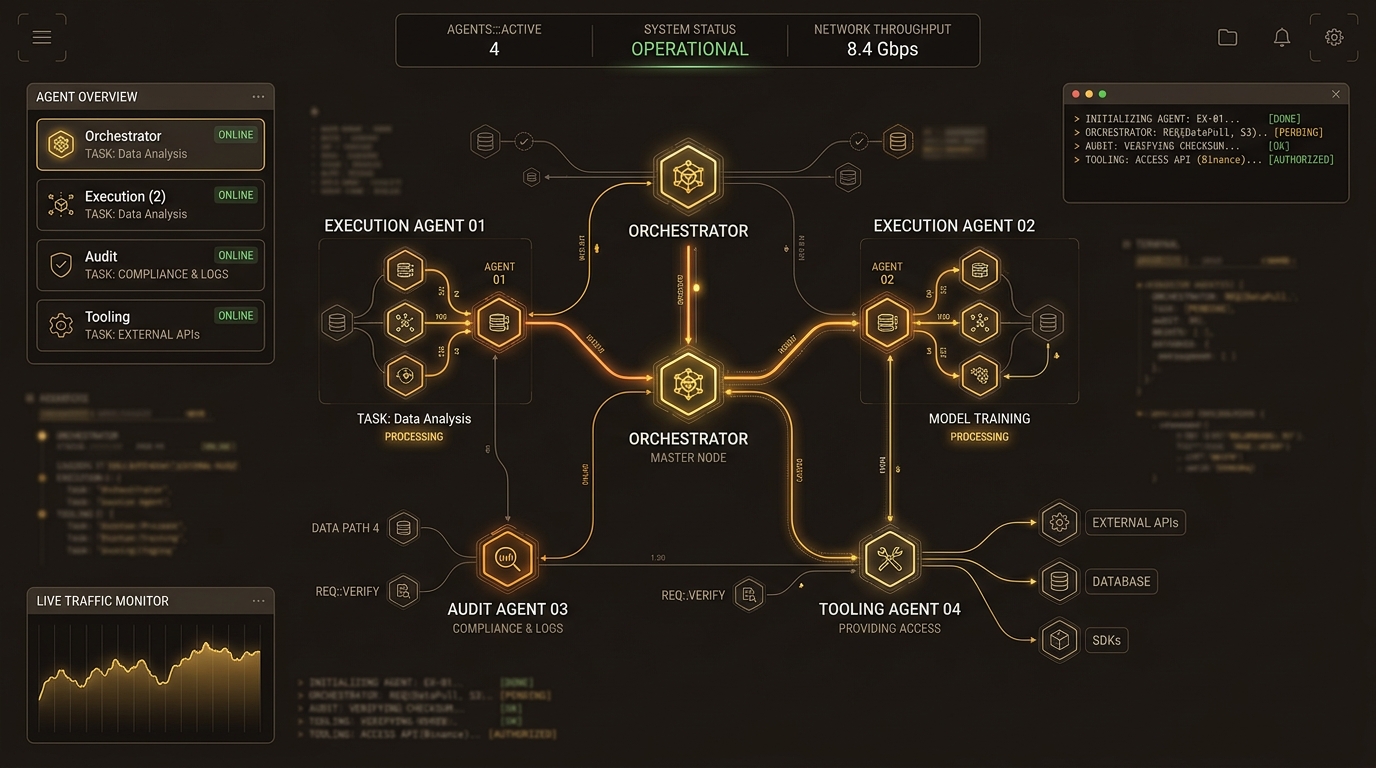
Monomind runs its core memory, orchestration, and tooling locally, on hardware you control.
Over the past few years, developers experimenting with AI coding agents have run into the same wall: prototypes look great, but putting proprietary code, internal docs, or customer data through a third-party API stops being an easy call the moment legal, security, or a cautious engineer asks where that data actually goes.
At the same time, every long-running agent loop - the kind that reads files, calls tools, and iterates - burns tokens against a metered API, and it's hard to predict what a given session will cost until the bill arrives. At Monoes, we built Monomind to take a different path: a local-first, open-source CLI and MCP server that keeps orchestration, memory, and tooling on your machine, and connects to whichever AI provider you choose to bring.
1. Data Sovereignty: Local by Default
Orchestration and memory run on your machine, not ours
Monomind is a CLI plus an MCP server. Instead of routing your project through a hosted platform, it runs as a local process that plugs into whichever coding agent you're already using - Claude Code by default, and also opencode, Google Antigravity, and Kimi Code, all through the standard Model Context Protocol. There's no Monoes-hosted platform in between your code and your editor.
The memory layer that gives agents context - your project's history, embeddings, and search index - is stored locally too: SQLite (via better-sqlite3, with a sql.js WebAssembly fallback if the native binary can't load) plus local MiniLM embeddings for semantic search. None of that indexing or retrieval work requires a network call.
Because Monomind isn't tied to a single hosted backend, you're also not locked into one AI vendor. It's bring-your-own-key: you use whatever subscription or API access you already have for the model calls it does make, and you can swap the underlying coding agent without re-architecting your setup.
# Local semantic search over your project's memory store - no network call
npx monomind@latest memory search --query "authentication patterns" --namespace patterns

# Inspect what's actually being stored
npx monomind@latest memory list --namespace patterns --limit 10
Key Takeaways
- ✓Monomind's orchestration and memory search run as a local process - no hosted platform sits between your code and your agent.
- ✓The memory backend is local SQLite plus local embeddings; a pure-JS HNSW index exists purely as a dormant fallback if native SQLite fails to load, not a primary search path.
- ✓MCP support for Claude Code, opencode, Google Antigravity, and Kimi Code means no lock-in to a single AI provider.
2. The Economics of Running Locally
You already pay for your model access - Monomind doesn't add a second toll
Metered AI platforms charge for more than model inference - they often meter the orchestration layer around it too: every intermediate tool call, every retry, every piece of context an agent re-reads. That's a second bill stacked on top of whatever you're already paying your model provider.
Because Monomind's orchestration, indexing, and memory retrieval run locally instead of through a hosted service, they don't add their own per-call metering on top of your model provider's bill. Your marginal cost is whatever your BYOK model access already costs - Monomind itself doesn't tax the loop.
That's a meaningfully lower and more predictable marginal cost for iterative, tool-heavy agent work, even without a specific dollar figure attached to it - the honest version of the claim doesn't need a fabricated benchmark to hold up.

“If the orchestration layer around your agent is itself a metered SaaS product, you're paying twice for the same loop. We built Monomind so that layer runs on your own hardware instead.”
- Monomind Core Team
Key Takeaways
- ✓Monomind doesn't meter orchestration, indexing, or memory retrieval on top of your model provider's bill.
- ✓It's BYOK - you bring the API key or subscription for the model calls it makes.
- ✓No fabricated cost or benchmark figures here: the honest claim is 'lower marginal cost,' not a specific dollar amount.
3. An Extensible, Apache-2.0 Open-Source Ecosystem
Inspect it, extend it, self-host it - without a restrictive license
Monomind is released under the Apache-2.0 license, which gives you the freedom to read, modify, self-host, and build on the code, along with an explicit patent grant - a meaningfully different, and for many teams more comfortable, guarantee than a closed platform's terms of service.
The CLI and MCP tool surface are built to be extended: new tool integrations, custom agent roles, and workflow automation can be layered on top of the existing TypeScript codebase without waiting on a vendor roadmap.
One honest caveat worth stating plainly: Monomind ships with crash reporting enabled by default. If a tool hits a hard crash, it can file a GitHub issue on that tool's own repository via the GitHub API, with secrets and PII redacted before anything is sent - it never phones a Monoes-controlled server. You can turn it off entirely with monomind crash-reporting disable. We'd rather say that clearly than claim 'zero data ever leaves your machine' and have you find out otherwise.

Key Takeaways
- ✓Monomind is Apache-2.0, not MIT - open, extensible, and with an explicit patent grant.
- ✓Crash reporting is on by default and opt-out (monomind crash-reporting disable); when it fires, it files a redacted GitHub issue on the relevant tool's own repo, never a Monoes-controlled server.
- ✓No hosted telemetry backend exists to opt out of in the first place - the honest privacy story is 'no vendor telemetry server,' not 'zero network calls, ever.'
Conclusion & Future Outlook
The thesis behind Monomind hasn't changed: local-first, sovereign AI tooling that doesn't lock you into one vendor or meter your orchestration loop on top of your model bill. What's changed in this piece is a commitment to only make claims we can actually stand behind - accurate licensing, an honest description of the memory architecture, and a clear-eyed account of the one outbound call the tool does make by default.
Explore the open-source Monomind engine on GitHub, or read the docs to see how it plugs into Claude Code, opencode, Google Antigravity, or Kimi Code.
Deploy Monomind Digital Workers Today
Run open-source AI agent teams on your own infrastructure or hire Monoes Workforce to build and audit fully managed operations.
0 comments
No comments yet.